
Atlassian Solution
Marketing and Sales CRM on Jira Service Management (JSM)
Marketing and Sales teams often need CRM-like structure without adding another silo.
This solution delivers a Marketing and Sales CRM on Jira Service Management and Jira by centralizing intake, qualification, pipeline execution, customer-facing requests, documentation, and reporting.
This solution typically combines:
Jira Service Management (JSM) for external/internal request intake via portal, request types, queues, and SLAs
Jira for pipeline execution using Kanban boards and team-friendly views
Confluence for playbooks, campaign documentation, FAQs, and knowledge base content connected to the service portal
EazyBI for scalable analytics, dashboards, and executive reporting from Jira data
Optional: Assets in JSM Premium/Enterprise to model structured objects (e.g., accounts, subscriptions, contracts, products, territories) when a shared data registry is required
Read articles about Marketing and Sales CRM on Jira Service Management
Why This Matters: Challenges We Solve
Leads and requests arrive through too many channels
Email, forms, chat, and spreadsheets create missed follow-ups and inconsistent qualification.
Marketing → Sales handoffs are unclear
MQL/SQL transitions lack ownership, SLAs, and traceability across teams and regions.
Pipeline visibility is unreliable
Opportunity status is updated inconsistently, making forecasts and prioritization low-confidence.
Approvals and compliance slow work down
Campaign launches, discounts, and legal reviews rely on manual chasing and non-auditable approvals.
Customer/partner requests don’t fit “IT ticketing” tools
Sales support, proposals, onboarding questions, and partner requests need a branded, structured intake experience.
Reporting becomes a manual consolidation effort
Leadership dashboards require exporting data and reconciling sources instead of using one analytics layer.
Core Features of Marketing and Sales CRM on Jira Service Management (JSM)
1) CRM Data Model in Jira (Leads, Accounts, Opportunities, Campaign Work)
A practical CRM model is implemented using Jira issue types and fields to represent:
Leads (source, region, product interest, qualification stage)
Opportunities (value, close date, probability, next action)
Accounts / customers (ownership, segment, renewal date)
Marketing work (campaigns, assets, approvals, deliverables)
Where a shared reference dataset is needed (accounts/contracts/products), Assets in JSM Premium/Enterprise can provide structured objects and relationships that can be selected in requests and linked to work items.
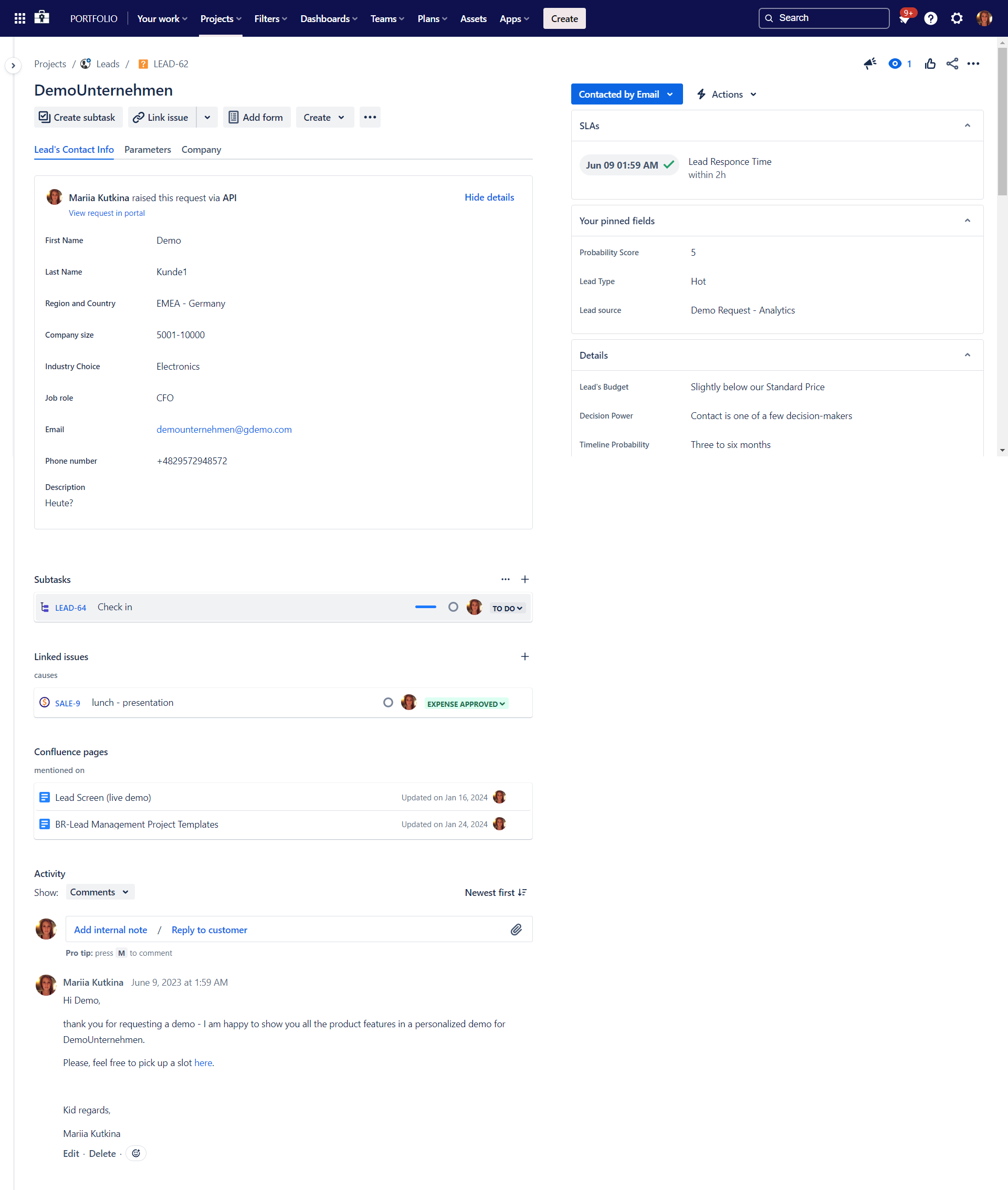
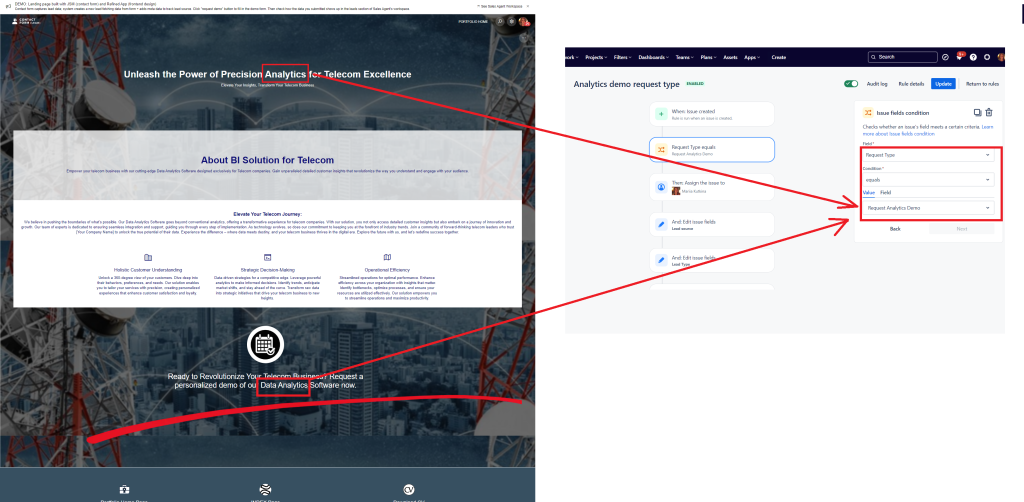
Lead & Request Intake via JSM Portal
2) Lead & Request Intake via JSM Portal (Forms, Request Types, Routing)
JSM supports a customer-style help center experience with customizable request types grouped for easy navigation.
Common portals include:
“Request a demo / contact sales”
“Partner request”
“Pricing/discount approval”
“Sales enablement request”
“Marketing creative request”
“Campaign launch intake”
Requests are routed into queues for triage and assignment, enabling consistent handling at scale.
3) SLAs for Lead Response and Sales Support Commitments
SLAs can be configured in Jira Service Management to set goals for how quickly requests are handled (for example, time to first response and resolution).
Typical business SLAs include:
Lead response time by region (e.g., within 1 business hour)
Partner inquiry response time
Pricing approval turnaround time
Customer onboarding request completion targets
Lead & Request Intake JSM Portal Form
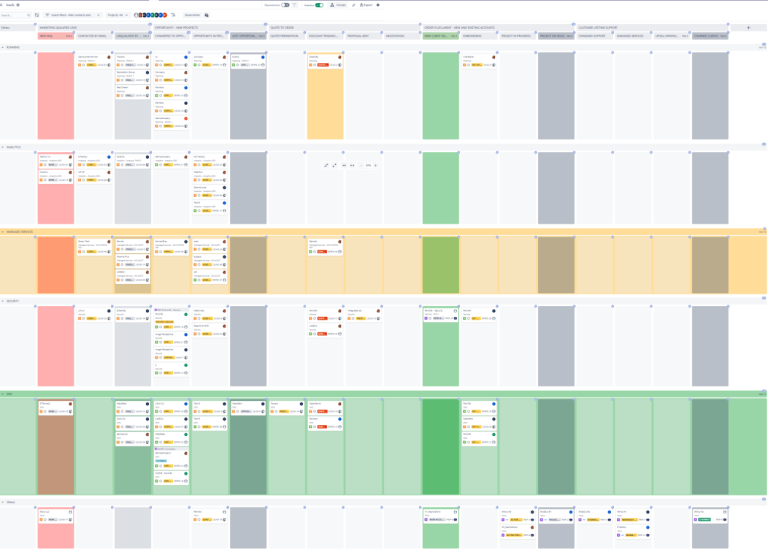
Shared Sales and Marketing Kanban Boards Template in JSM
4) Pipeline Execution with Kanban Boards and Multiple Views
Sales and marketing operations benefit from visual execution:
Kanban boards for lead qualification, opportunity progression, and campaign delivery flow
Views that support different stakeholders (agents, managers, executives)
Within JSM, work can be visualized as list, board, or calendar views to suit different operating styles.
5) Confluence for Enablement, Documentation, and Self-Service
Confluence becomes the system of record for:
Sales playbooks, discovery scripts, and proposal templates
Campaign briefs, checklists, and launch criteria
Pricing/discount policies and approval guidance
Partner onboarding packs and FAQs
A JSM knowledge base can be connected so users can self-serve via articles in the help center instead of raising requests.
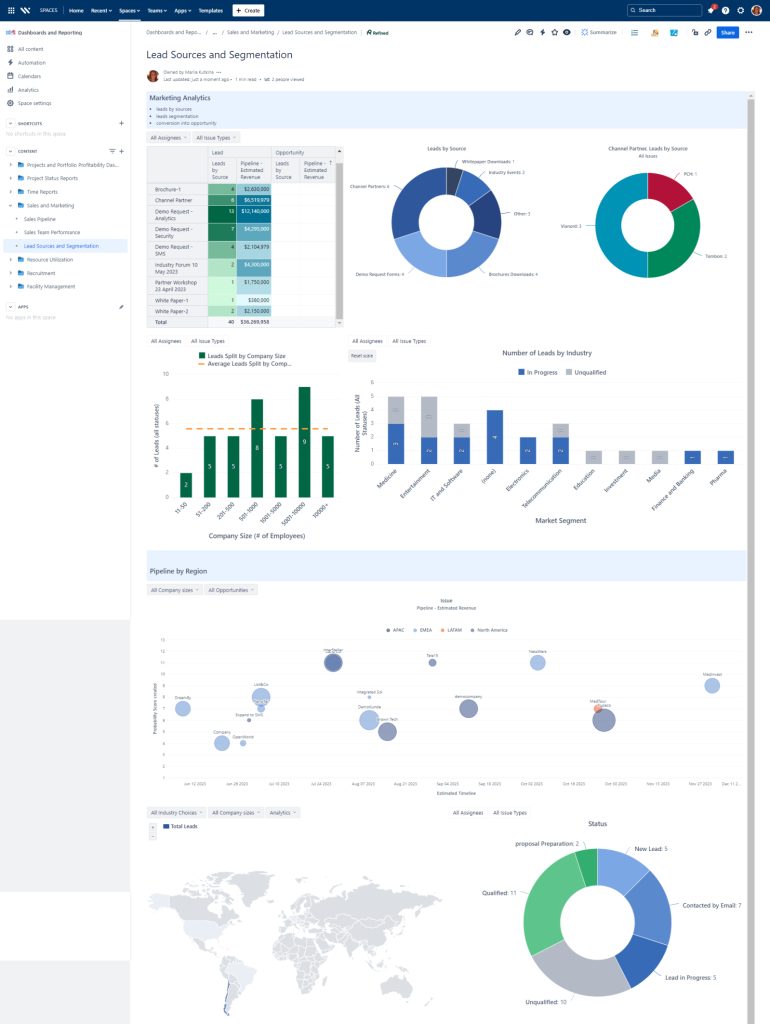
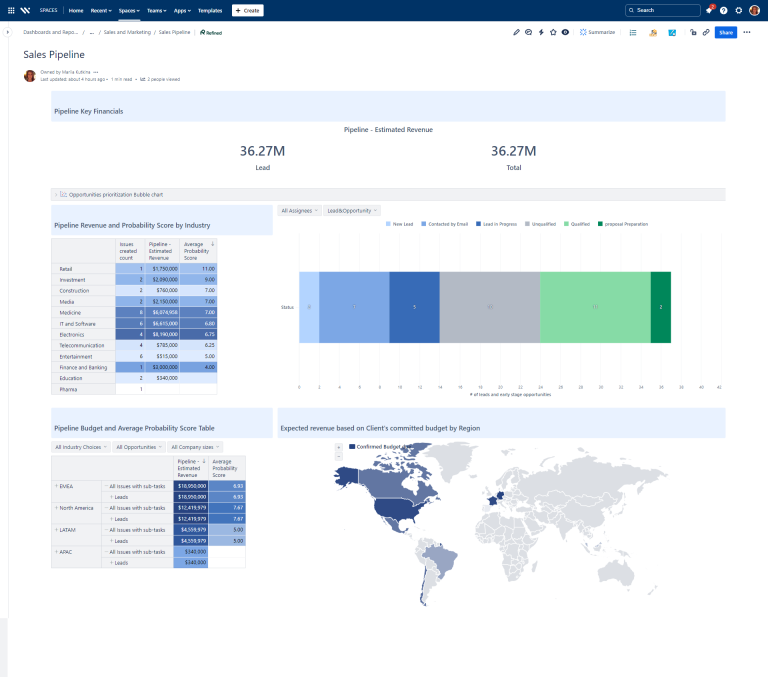
Leads Dashboard with EazyBI - Data pulled from CRM on Jira Service Management
6) Executive Reporting with eazyBI (Dashboards, Trends, Rollups)
EazyBI provides a scalable reporting layer for Jira, enabling custom dashboards across teams, projects, and historical states.
Common analytics include:
Lead response and SLA compliance by region/team
Funnel conversion by source and segment
Pipeline aging and stage distribution
Marketing throughput and campaign cycle times
Sales support workload, backlog, and bottlenecks
Reports can be published to Jira dashboards, and can also be shared in Confluence with the appropriate setup.
How It Works: Solution Architecture
Atlassian Platform Foundation
Jira + Jira Service Management + Confluence + EazyBI + JSM Assets for shared data objects (optional)
Connected Lifecycle
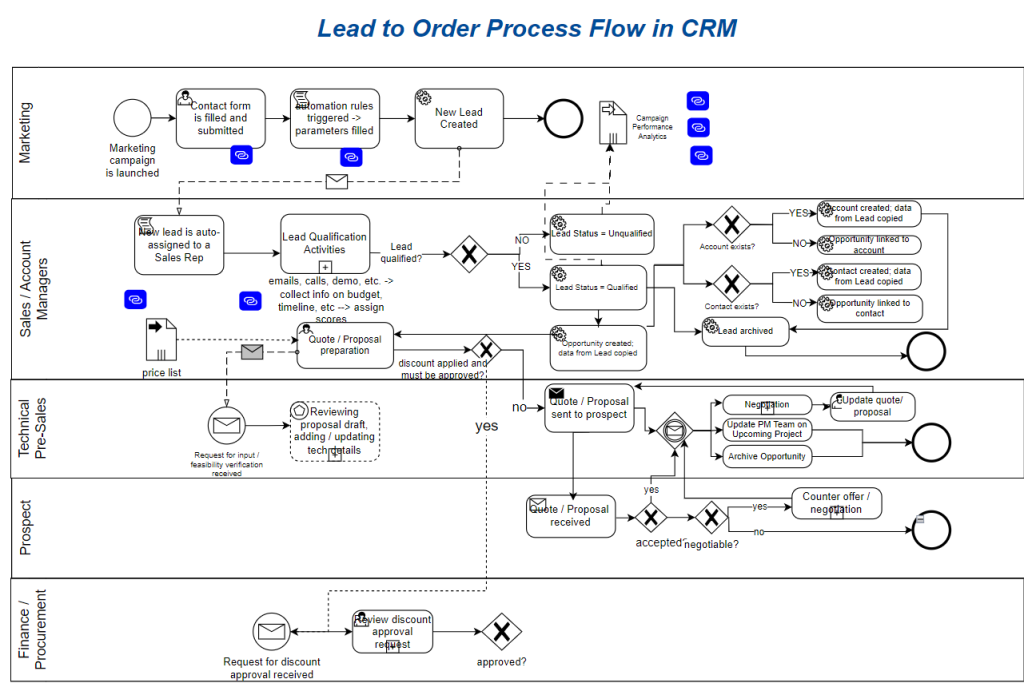
Intake (portal/forms) → routing (queues) → qualification/workflow → pipeline execution (boards/views) → documentation (Confluence) → analytics (EazyBI dashboards).
Governance That Scales
Role-based workflows, approval steps, and audit trails embedded into Jira/JSM configuration so growth does not create chaos.
Templates Included into Marketing and Sales CRM on Jira Service Management (JSM)
Resource and Capacity Management Template
Template Resource and Capacity Management Template Plan, forecast, and track...
Read MoreShared Kanban Boards Template with Atlassian Jira
Template Shared Kanban Boards Template with Atlassian Jira Standardize how...
Read MorePersonal Workspace
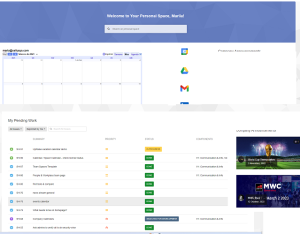
Template Personal Workspace Template for Confluence Give every employee a...
Read MoreTeam Specific Space on Intranet
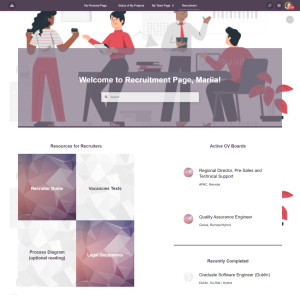
Template Team Specific Space on Intranet Template in Confluence Give...
Read MoreKey Performance Indications (KPI) Template
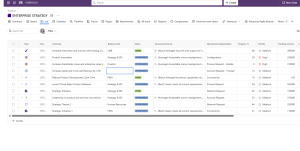
Template Key Performance Indicators (KPI) Template Define, measure, and track...
Read MoreSales and Marketing Report Template for Atlassian Jira and Confluence
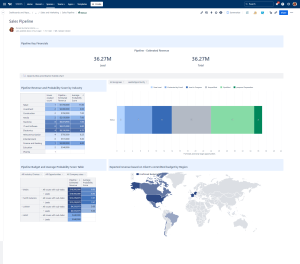
Track campaigns, leads, opportunities, and performance with the Sales and...
Read MoreCustomer Service Desk Template with Jira Service Management and Confluence

Customer Service Desk to manage requests, streamline support workflows, and...
Read MoreDedicated Customer Portal Template with Atlassian Confluence
Build a branded customer portal using Confluence to deliver documentation,...
Read MoreConsulting Services Related to Marketing and Sales CRM on Jira Service Management (JSM)
FAQ about Marketing and Sales CRM on Jira Service Management (JSM)
A common enterprise pattern is a shared global intake taxonomy (request types, mandatory fields, routing rules) with regional queues, localized forms, and region-specific SLAs—so reporting stays consistent while operations stay practical.
SLAs in JSM can be tied to key workflow statuses and ownership changes, making response-time performance visible and measurable across handoff points.
A scalable approach uses structured fields for next action/due date, automated reminders based on inactivity, and board policies that prevent work from aging unnoticed—so the system drives consistency.
Separate request catalogs and queues keep workstreams distinct, while shared reporting dimensions (region, product line, segment, priority) enable consolidated leadership visibility.
Enterprise setups typically use role-based permissions, restricted fields, and controlled sharing views so sales leadership has transparency without exposing sensitive customer attributes to broad audiences.
Assets becomes valuable when a structured registry is needed (accounts/products/subscriptions/contracts) that can be linked to requests and work items, and maintained as a single reference dataset—available in JSM Premium/Enterprise.